
Imagine how much planning is required for a park. Landscape architects are aware of the circulation of pedestrians, accessibility and drainage concerns, as well as parking, lighting, the design of playgrounds, as well as what groups are likely to utilize the space. The most commonly used structures can often be considered a normal construction.
A restroom deserves more consideration. There are sanitation and plumbing needs, accessibility standards as well as security, maintenance, and building code obligations. It has to be able to stand up to the weather for years and heavy use by people.
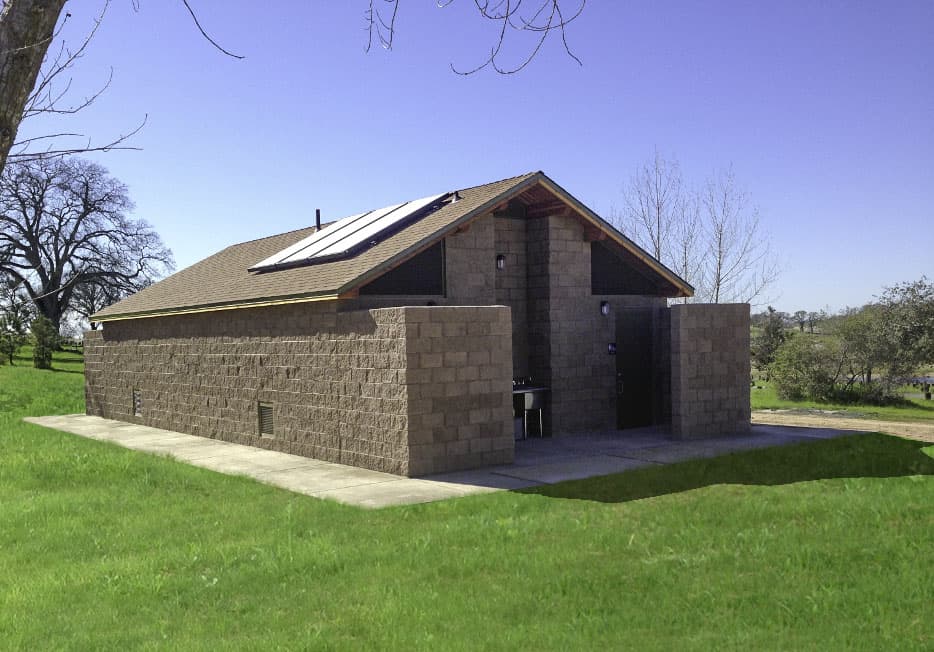
Image credit: romtec.com
Romtec’s design approach makes bathroom design a part of the overall plan of the site, not as an afterthought.
Prefabricated Buildings don’t have to be the same
Park restrooms that are prefabricated can be an insufficient range of standard constructions. Kit-based strategies can differ.
Romtec develops custom designs and provides the engineering documentation and construction materials required to construct the designs, along with plans and specifications. Landscape architects are able to select the styles and materials that are appropriate to the particular project while drawing on Romtec’s knowledge of codes, ADA requirements, components, pricing, and construction.
A municipality, for instance, which is rehabilitating an old park may have a different view of the exterior than a recreation department building the new sports facility. Both could benefit from a co-ordinated building supply procedure, without needing to design the building in the same manner.
City Streets Are a Different Design Challenge
Restrooms located in dense urban areas are confronted with specific operational challenges. They are likely to be surrounded by constant pedestrian traffic and need to be aware of vandalism, lingering, safety, and the frequent cleaning.
Romtec’s sidewalk toilets incorporate visibility into their exterior designs to promote natural surveillance and maintain the functions for a public building. Utilizing low-maintenance elements and materials that resist vandalism is essential because public institutions are often faced with constant repairs.
The purpose of building a restroom isn’t to just enhance its strength. The materials, layout and the environment of the bathroom must all be in sync to simplify the process to manage.
Sometimes the Most Important Question Is Underground
Before planning the design of a bathroom, planners should consider the infrastructure that is in place.
A well-developed city park could be connected to electric, water, and sanitation sewer lines. When you extend these utilities to a remote camping area or trailhead it can be a major expense.
For suitable locations, vault toilets provide a waterless alternative. Romtec also has elements for these facilities, such as its single-piece polyethylene toilet riser. The material, smooth, molded plastic is abrasion-resistant, chemical-resistant material, easy to maintain, and designed to deter the growth of bacterial. It can be utilized in vault toilets, whether new or existing facilities.
Design for those arriving after the Closing Time
Visitors are only able to use the bathroom for a brief time. Maintenance teams are required to handle this for years.
It’s the difference in perspective that matters. Hard to clean surfaces, parts that break easily, and materials that aren’t designed for repeat cleaning are just a few examples of small design choices which can end up costing you money.
Durability and reliability are therefore a must in early design discussions alongside aesthetics and construction costs. The long-term value of the structure can be affected by sustainable materials, energy efficient systems, vandal resistance fixtures and accessibility to maintenance.
Even a small building can be a part of the landscape
The style of the restroom shouldn’t be as beautiful as the park surrounding it. It shouldn’t look as if it was a blunder.
Romtec’s custom approach gives designers and public agencies the opportunity to coordinate restroom facilities that include pavilions, shelters campsites, pools, trails, and surrounding architecture. However practical considerations such as ADA accessibility, code compliance, sanitation durable, and maintenance are still at the forefront of the design.
When these considerations are combined with the goal of creating just a toilet. It’s an infrastructure piece for the public that is designed to meet the needs of the particular locality and surrounding.