
To make quality 3D content, it used to take a mixture of technical skills, artistic abilities as well as a significant amount of time. Designers had to manually create sculpts as well as apply textures, modify lighting and prepare files for different platforms. Artificial intelligence has changed the way they work. AI-powered 3D modeling tools let creators to quickly design and create complex images, starting with the simplest text or a photo.
This fresh approach makes 3D design more accessible for both professionals and beginners and also allows for quicker production as well as more imaginative experimentation.
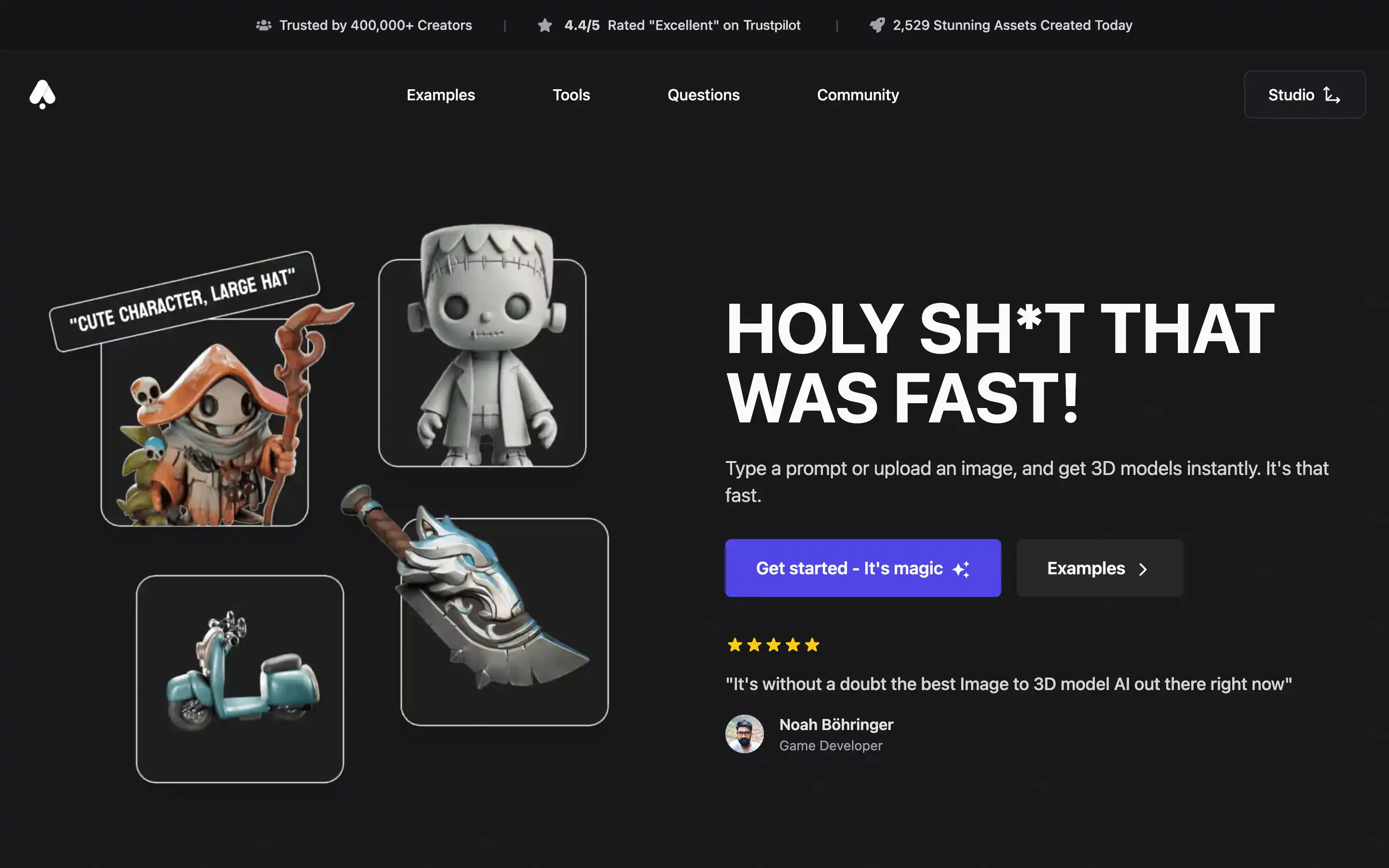
Within minutes, change from picture to 3D model in just a few minutes.
The image to 3D models technology is an innovation in this field. Artificial intelligence uses an image to detect shapes and depths. It then reconstructs the 3D model.
This capability is particularly useful for industries that require speed and precision in their visuals. Game developers can design and prototype their objects quickly, architects can see structures prior to construction, and product designers can try out ideas without lengthy modeling sessions. It’s not just marketers and educators who benefit from the ability to transform visual concepts into 3D interactive content.
The savings in time are substantial. The savings from time are significant.
The Reasons AI 3D Model Creation Is Gaining Popularity
The demand for AI 3D model tools continues to grow because they simplify complex workflows. Artificial intelligence trained on massive data sets can create realistic shapes, materials and maintain consistency and accuracy.
This speed does not just boost productivity, but also encourages innovative thinking. Designers can rapidly test various versions of the same idea, compare results and choose the best option. This fast iteration method is now a necessity in various industries like film production, virtual reality, advertising, and e-commerce visualization.
Accessibility is a major advantage. Modern platforms make it possible for those with little experience in 3D design to still make high-quality assets.
Integrate seamlessly into professional workflows
Professionals, compatibility and speed are equally crucial. Modern 3D models AI platforms are designed to integrate smoothly into existing pipelines. Models can be downloaded in a range of formats, including FBX (File Format), OBJ (Object File Format), GLB (Global Language Base), STL and USDZ. This makes them used in 3D printers rendering engines, and game engines.
The organization of asset databases plays an important role in the process of achieving effective production. The ability to search and find every model generated assists teams in managing projects. Filtering models by tags as well as downloading large quantities of files and quickly regaining previous versions can save hours of administrative work.
Security and privacy are becoming more common and offer creators the possibility of using their work in commercial and creative projects right away.
Control and Precision with AI Tools
Modern AI tools for 3D models usually include detailed adjustments capabilities. Users can set exact measurements, define pivot points, and guarantee that objects are placed in the right place in scenes. These features are crucial for simulation, animation, and architectural visualization, where precision is vital.
Artificial intelligence is also employed to create realistic textures, which allows creators to produce materials much faster. It can reduce the time needed to paint by hand, while still maintaining a professional appearance.
Future of 3D Model AI
As AI continues to grow, 3D models AI will provide more options. While AI continues to advance and improve, advanced AI models will be able to create whole environments, optimize assets and adapt models without further steps.
These platforms are already proving the potential of these platforms. 3D AI Studio, the most powerful 3D asset studio reflects this new generation of software designed to streamline workflows, simplify the creation process and assist creators move from an idea or concept to a finalized model in a short amount of time.
Conclusion
Digital content production is transformed by the capability to rapidly move from conceptual idea to an actual piece of work. Technology for converting images into 3D models and sophisticated AI 3D models tools allow creators to get beyond manual processes that are slow and inefficient.
These technologies will continue to develop and play a bigger impact in fields such as entertainment, gaming, engineering, and education. They will enable high-quality 3D production quicker, more intelligent and more affordable.